


This joint statement was released during the ANSO General Conference 2025: Science and Innovation for a Sustainable Future, held by the Alliance of International Science Organizations (ANSO) in the Belt and Road Region. The International Research Network on AI Development and Governance (AIR Net) was officially inaugurated. Professor Yi Zeng, Research Fellow at the Institute of Automation, Chinese Academy of Sciences, and Director of the Beijing Prospective Institute for AI Safety and Governance, together with Professor Seán Ó hÉigeartaigh of the University of Cambridge, chaired the inauguration ceremony and issued the joint statement.
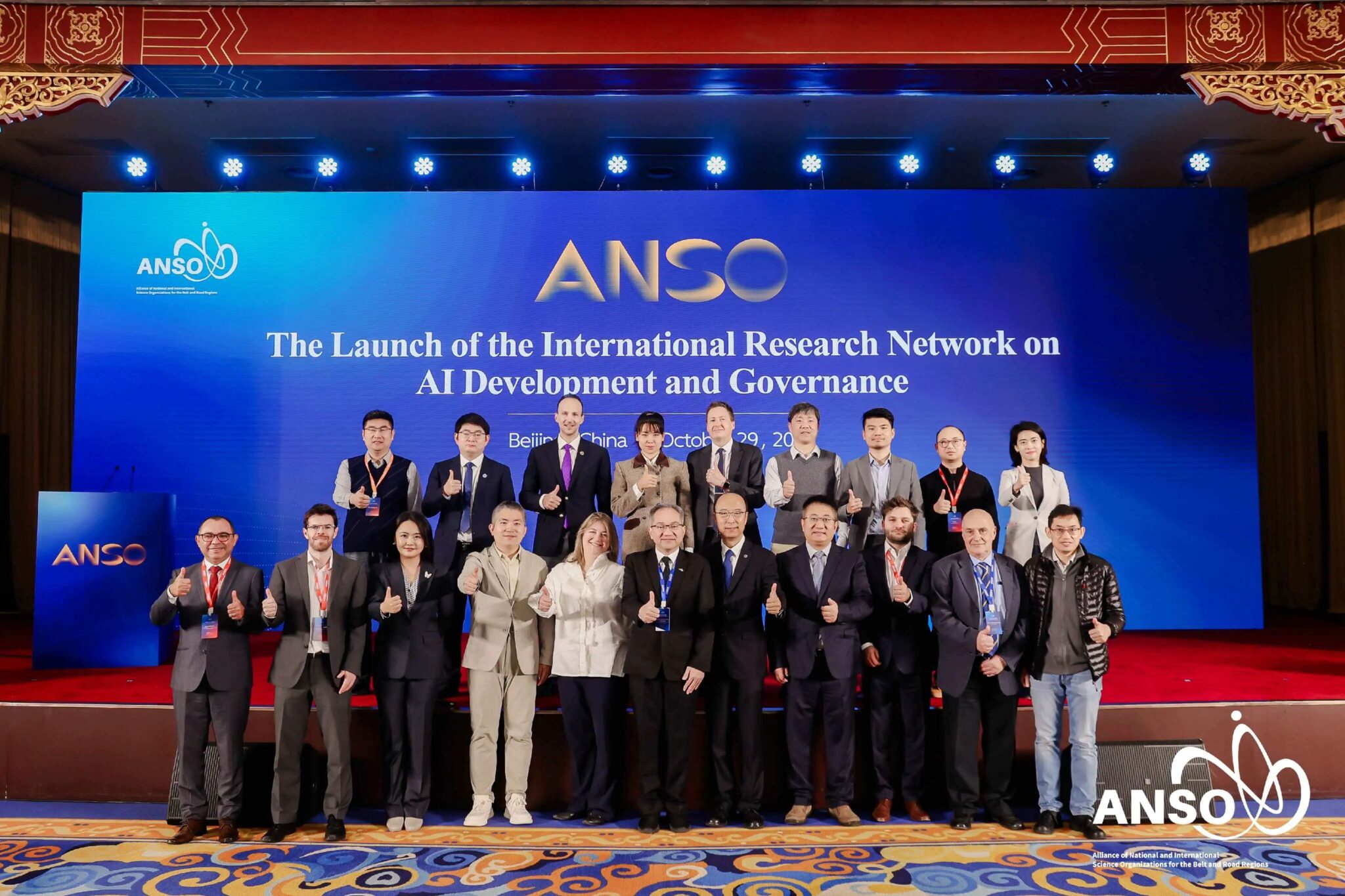
The International Research Network on AI Development and Governance (AIR Net) officially inaugurated.
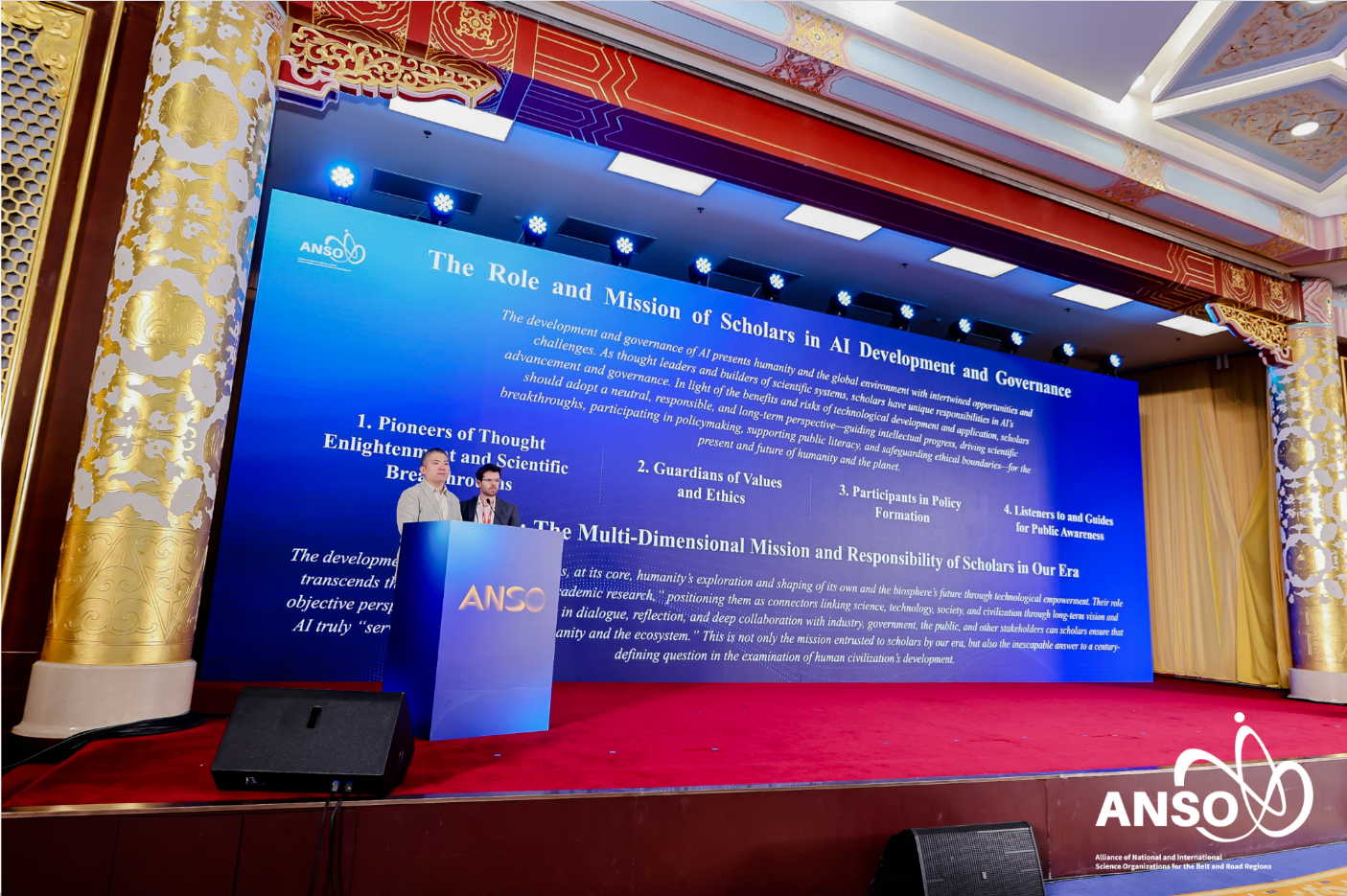 The Co-Chairs of the research network issued the joint statement on "The Role and Mission of Researchers in AI Development and Governance."
The development and governance of artificial intelligence (AI) presents humanity and the global environment with intertwined opportunities and challenges. As thought leaders and builders of scientific systems, researchers bear unique responsibilities in AI's advancement and governance. In light of the benefits and risks brought by technological development and application, researchers should adopt a neutral, responsible, and long-term perspective—guiding intellectual progress, driving scientific breakthroughs, participating in policymaking, promoting public awareness, and safeguarding ethical boundaries—all for the present and future of humanity and the planet.
1. Pioneers of Thought Leadership and Scientific Breakthroughs
Researchers should ensure the rationality of AI's developmental pathways through the lens of science and engineering. By embracing long-term thinking to counteract technological short-sightedness, researchers should explore diverse approaches. Regardless of which direction may yield relatively better short-term applications, theoretical and foundational preparations should be made to navigate an uncertain future. Researchers across different disciplines should collaborate deeply through interdisciplinary perspectives, examining the essence of nature, AI, and their interrelationship, and studying the scientific and technological foundations of AI and its potential social impacts with foresight.
2. Guardians of Values and Ethics
Researchers in both the natural and social sciences should proactively engage the public in reflecting on what AI should and should not be used for. They must uphold a cautious and critical spirit, objectively assessing the benefits and harms brought by technological advances and applications, and infusing AI development with rationality and humanistic warmth. The development and application of technology should be guided by the overarching goal of promoting human and ecological flourishing. Researchers must not only anticipate, identify, and warn of ethical risks in a timely manner, but also collaborate with industry and government to jointly eliminate potential risks through technological and governance approaches.
3. Participants in Policymaking
Researchers serve as crucial bridges linking technological practice with institutional design. They bear the responsibility of translating academic research and societal concerns into policy proposals and recommendations, using foresight, professional expertise, and empirical evidence to assess and substantiate risks, thereby providing theoretical foundations and reference points for policymaking. Through comparative research, they should examine and draw upon international experience, acting as advocates, participants, and communicators in global cooperation, and contributing to the formation of international policies and standards. In facilitating multi-stakeholder interaction among industry, academia, research, and government, researchers should adopt an objective stance to support policy implementation and the calibration of agile governance.
4. Listeners to and Guides for Public Awareness
The rapid development and widespread penetration of AI have left the public both anticipating intelligent living and, at the same time, harboring considerable confusion due to insufficient awareness of potential risks. While listening to public concerns, researchers should also support society in developing a more robust understanding. Through popular science publications, public lectures, and various other means, they should help the public establish a scientific and objective understanding of AI itself, its stages of development, and its potential risks. By studying public needs and concerns, researchers can integrate these voices into the trajectory of future technological development and application, working jointly with businesses, governments, and other stakeholders to address the demands and challenges of development and to actively respond to public and societal concerns.
The Multidimensional Mission and Responsibility Entrusted to Researchers by Our Era
The development and governance of AI is, at its core, humanity's exploration and shaping of its own and the biosphere's future through the power of technology. Researchers are not only explorers at the frontier of knowledge and scientific progress, but also guardians of ethical boundaries; not only participants in policymaking, but also guides for public understanding and literacy. Their role has transcended the single dimension of "academic research," positioning them as a nexus linking science and technology, society, and civilization through long-term vision and an objective perspective. Only through deep dialogue, reflection, and collaboration with industry, government, the public, and other stakeholders can researchers ensure that AI truly "serves the flourishing of humanity and the ecosystem." This is the mission entrusted to researchers by our era, and a century-defining question that cannot be evaded in the examination of human civilization's development.
The Role and Mission of Researchers in AI Development and Governance
—— A Joint Statement from the International Research Network on AI Development and Governance (AIR Net)
The development and governance of artificial intelligence (AI) presents humanity and the global environment with intertwined opportunities and challenges. As thought leaders and builders of scientific systems, researchers have unique responsibilities in AI's advancement and governance. In light of the benefits and risks of technological development and application, researchers should adopt a neutral, responsible, and long-term perspective—guiding intellectual progress, driving scientific breakthroughs, participating in policymaking, supporting public literacy, and safeguarding ethical boundaries—for the present and future of humanity and the planet.
1. Pioneers of Thought Enlightenment and Scientific Breakthroughs
Researchers should ensure the rationality of AI's developmental pathways by providing scientific and engineering perspectives. By embracing long-term thinking to counteract technological short-sightedness, researchers should explore diverse approaches, regardless of which path may yield relatively better short-term applications, thereby preparing theoretical and foundational grounds for navigating an uncertain future. Researchers across disciplines should collaborate deeply through interdisciplinary perspectives, examining the essence of nature, AI, and their relationship, while studying the scientific and technological foundations of AI and its potential social impacts from a forward-looking perspective.
2. Guardians of Values and Ethics
Researchers in the natural and social sciences should engage with the public to consider what AI ought to be used for, and how it ought not to be used. They must maintain a cautious, critical spirit to objectively assess the benefits and harms of technological advances and applications, infusing AI development with rationality and humanistic warmth. AI should be developed and applied with the overarching goal of promoting human and ecological flourishing. Researchers must not only anticipate, identify, and report ethical risks in a timely manner, but also work collaboratively with industry and government to mitigate and eliminate potential risks through scientific, technological, and governance approaches.
3. Participants in Policy Formation
Researchers serve as crucial bridges linking technological practice with institutional design. They have a responsibility to translate academic research and societal concerns into proposals and policy recommendations, using foresight, expertise, and empirical evidence to assess and substantiate risks, thereby providing theoretical foundations and reference points for policymaking. Through comparative research, they should examine and draw on international experience, acting as advocates, participants, and bridges in global cooperation, contributing to the formulation of international policies and standards. By maintaining objectivity and promoting interaction among industry, academia, research, and government, researchers should help calibrate policy implementation and agile governance.
4. Listeners to and Guides for Public Awareness
The rapid development and widespread penetration of AI have brought both anticipation and confusion among the public—desire for intelligent living alongside a lack of awareness of potential risks. Researchers should listen to public concerns while supporting societal understanding. Through popular science works, public lectures, and other efforts, they should help foster a scientific and objective public understanding of AI, its stages of development, and potential risks. By conducting research into public needs and concerns, researchers can incorporate these perspectives into the future trajectory of technological development and application, working with businesses, governments, and other stakeholders to address the demands and challenges of progress while actively responding to public and societal concerns.
The Multi-Dimensional Mission and Responsibility of Researchers in Our Era
The development and governance of AI is, at its core, humanity's exploration and shaping of its own and the biosphere's future through technological empowerment. Researchers are not only explorers at the frontier of intellectual inquiry and scientific progress, but also guardians of ethical boundaries; not only participants in policymaking, but also guides for public understanding and literacy. Their role transcends the single dimension of "academic research," positioning them as connectors linking science, technology, society, and civilization through long-term vision and objective perspective. Only by engaging in dialogue, reflection, and deep collaboration with industry, government, the public, and other stakeholders can researchers ensure that AI truly "serves the flourishing of humanity and the ecosystem." This is not only the mission entrusted to researchers by our era, but also the inescapable answer to a century-defining question in the examination of human civilization's development.
About AIR Net
The International Research Network on AI Development and Governance (AIR Net) is an international research cooperation platform led by scholars and researchers under the auspices of the Alliance of International Science Organizations (ANSO) in the Belt and Road Region. It brings together interdisciplinary researchers and institutions in AI-related fields from around the world, jointly dedicated to research and application on AI for good—AI that benefits humanity and promotes sustainable development—as well as AI safety and risk, global capacity building, and inclusive sharing. The research network convenes regularly on selected frontier topics to advance collaborative scientific research and scientific reports.
Co-Chairs
Yi Zeng (Institute of Automation, Chinese Academy of Sciences; Beijing Prospective Institute for AI Safety and Governance)
Seán Ó hÉigeartaigh (University of Cambridge)
Expert Members
Christoph Luetge (Technical University of Munich, Germany)
Edson Prestes (Professor, Universidade Federal do Rio Grande do Sul, Brazil)
Anna Abramova (Professor, Director of AI Center, Moscow State Institute of International Relations, Russia)
Max Stauffer (Co-founder, Simon Institute for Longterm Governance)
Cyrus Hodes (Research Fellow, Mohammed Bin Rashid School of Government (MBRSG), UAE)
Renan Araujo (Institute for AI Policy and Strategy; originally Brazil)
Bengusu Ozcan (Institute for Future Generations, Turkey)
Sumaya Nur Adan (Centre for AI Security and Access, originally Kenya)
Helen Meng (Professor, The Chinese University of Hong Kong, Artificial Intelligence)
Jiji Zhang (Professor, The Chinese University of Hong Kong, Philosophy)
Jia Liu (Professor, Tsinghua University, Psychology)
Chao Liu (Professor, Beijing Normal University, Psychology)
Yaodong Yang (Research Fellow, Peking University, Artificial Intelligence)
Weixing Shen (Professor, Tsinghua University, Law)
Chaochao Lu (Research Fellow, Shanghai Artificial Intelligence Laboratory, Artificial Intelligence)
Minlie Huang (Professor, Tsinghua University, Artificial Intelligence)
Linghan Zhang (China University of Political Science and Law, Law)
Hang Su (Associate Professor, Tsinghua University, Artificial Intelligence)
Dongcheng Zhao (Senior Research Fellow, Beijing Prospective Institute for AI Safety and Governance, AI Safety)
Zhaofeng He (Professor, Beijing University of Posts and Telecommunications, Artificial Intelligence)
Kai Wei (Director, Institute of Artificial Intelligence, China Academy of Information and Communications Technology, AI Industry and Standardization)
Hao Sun (Professor, Renmin University of China, Artificial Intelligence)
Zhewei Wei (Professor, Renmin University of China, Artificial Intelligence)
Wei Liu (Professor, Renmin University of China, Philosophy)
Vasilis Trigkas (Professor, Tsinghua University, International Relations)
Wei Xu (Professor, Tsinghua University, Artificial Intelligence)
Yitao Liang (Research Fellow, Peking University, Artificial Intelligence)
Yaohui Jin (Professor, Shanghai Jiao Tong University, Artificial Intelligence)
Feifei Zhao (Associate Research Fellow, Institute of Automation, Chinese Academy of Sciences)
Minxi Xie (Anyuan AI, AI Safety)
Advisory Board
Vincent Muller (Humboldt Professor, University of Erlangen-Nuremberg, Germany, Philosophy and Ethics of AI)
Yaochu Jin (Professor, Westlake University, Artificial Intelligence)
Dacheng Tao (Professor, Nanyang Technological University, Singapore, Artificial Intelligence)
Michael Witbrock (Professor, University of Auckland, New Zealand, Artificial Intelligence)
Lan Xue (Professor, Tsinghua University, Public Policy)
Guoyu Wang (Professor, Fudan University, Philosophy)
Jirong Wen (Professor, Renmin University of China, Artificial Intelligence)
The Beijing Prospective Institute for AI Safety and Governance (Beijing Institute of AI Safety and Governance) is a new-type research and development institution that promotes the robust development and responsible application of artificial intelligence through AI safety development and governance. The Prospective Institute is dedicated to building a systematic safety and governance framework, providing solid safety guarantees for AI innovation and application, and leading new trends in AI safety and governance. The Prospective Institute is committed to bridging cutting-edge research in AI safety and governance with industry self-discipline and self-regulation, as well as new explorations in government guidance and oversight. Drawing on the rich academic resources and industrial strengths of Beijing and domestic and international partners, the Institute promotes interdisciplinary collaboration, continuously explores new research pathways, and addresses both potential and pressing issues in the field of AI ethics and safety. The Institute is also dedicated to strategic, forward-looking research on long-term AI risks and safety, and actively participates in and contributes to national strategies and international cooperation and exchange on AI safety and governance. The Prospective Institute not only serves Beijing and is rooted in Beijing, but also actively shares Beijing's explorations in AI safety and governance with provinces and cities across the country for joint discussion and advancement. It works together with relevant institutions nationwide to promote Chinese practice in AI safety and governance, amplify China's voice, and integrate into and contribute to the robust development of global AI.
Institute Website: http://beijing-aisi.ac.cn/
Contact: contact@beijing-aisi.ac.cn