


Morality is a cornerstone of human society and is widely regarded as a cognitive capacity that sets our species apart. Yet a fundamental question remains under debate: does moral decision-making possess its own dedicated neural machinery, or does it merely borrow the domain-general neural substrates used by other kinds of decisions?
Two opposing views have long coexisted in the field. The social brain hypothesis holds that moral decisions may depend on neural mechanisms specialized for processing social information, whereas the neural common currency hypothesis argues that information of different decision types can be represented through shared neural mechanisms.
To address this question, the team of Prof. Chao Liu at the State Key Laboratory of Cognitive Neuroscience and Learning and the IDG/McGovern Institute for Brain Research, Beijing Normal University, together with Associate Prof. Ruida Zhu at the Department of Psychology, Sun Yat-sen University, and the team of Prof. Christian C. Ruff at the University of Zurich, combined functional magnetic resonance imaging (fMRI) with computational modeling to systematically compare the computational mechanisms and neural bases of moral versus non-moral (perceptual) decision-making. The findings were published in October 2026 in the international journal PLOS Biology.
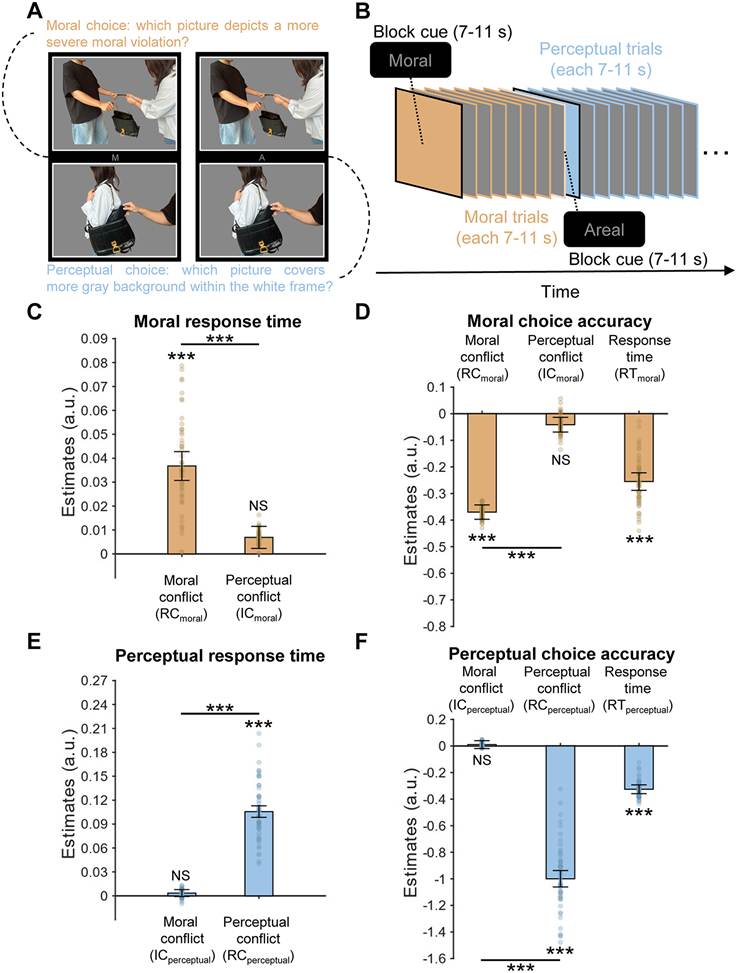
Figure 1. Experimental task and behavioral results
The study used a newly designed task: viewing the same set of picture stimuli, participants made two types of judgments in turn — which picture depicted a more severe moral violation (moral decisions), or which picture covered a larger area (perceptual decisions). Based on each participant's ratings of the pictures, the researchers induced decision conflicts of varying strength while recording behavioral performance and brain activity.
Moral and perceptual decisions turned out to be highly similar at the behavioral level: as decision conflict increased, participants responded more slowly and chose less accurately (Fig. 1); moreover, the behavior in both types of decisions was well captured by the same form of drift-diffusion model. This suggests that although moral and perceptual decisions involve quite different information, they may follow similar processes of evidence accumulation and choice.
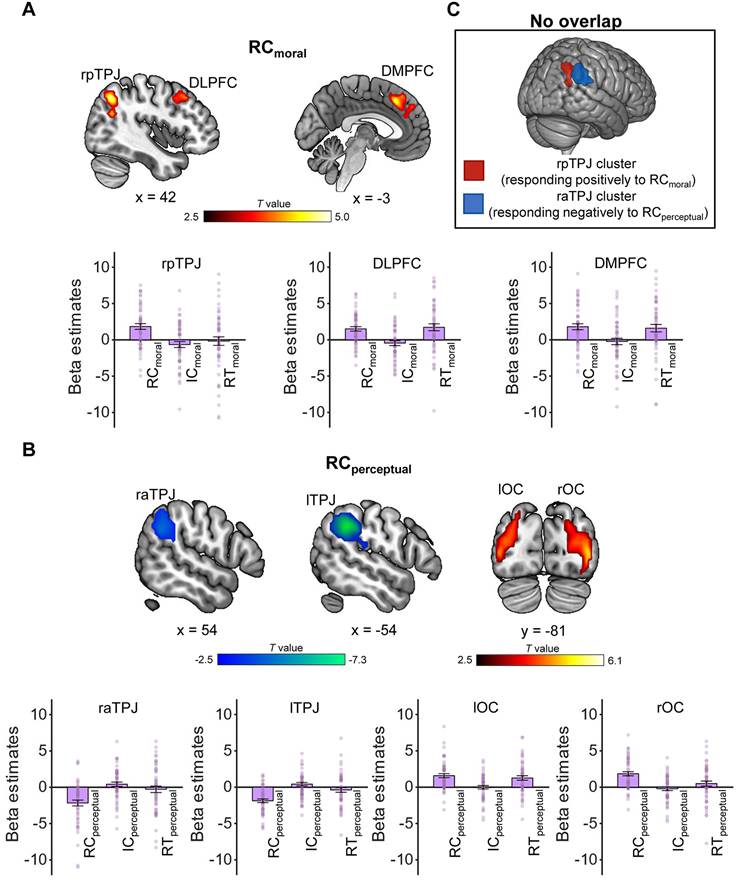
Figure 2. Brain activation patterns for moral and perceptual decisions
Brain imaging, however, revealed clear differences in how the two are neurally implemented. Moral decision conflict was mainly associated with increased activity in the right posterior temporoparietal junction (rpTPJ), the dorsolateral prefrontal cortex (DLPFC) and the dorsomedial prefrontal cortex (DMPFC), whereas perceptual decision conflict involved changes in the right anterior temporoparietal junction (raTPJ), the left temporoparietal junction (lTPJ) and occipital visual cortex (Fig. 2). Notably, different subregions of the right temporoparietal junction showed different — even opposite — patterns of activity for the two kinds of conflict. Functional connectivity analyses further showed that moral and perceptual decision conflicts differ in the connectivity patterns among several brain regions.
Author information
Associate Prof. Ruida Zhu (Department of Psychology, Sun Yat-sen University) is the first author. Prof. Chao Liu (State Key Laboratory of Cognitive Neuroscience and Learning & IDG/McGovern Institute for Brain Research, Beijing Normal University), Associate Prof. Ruida Zhu, and Prof. Christian C. Ruff (University of Zurich) are co-corresponding authors. Other authors include Marcus Grueschow and Marius Moisa from the Zurich Center for Neuroeconomics, University of Zurich. Prof. Chao Liu is also affiliated with the Beijing Key Laboratory of Safe AI and Superalignment and the Beijing Institute of AI Safety and Governance.
This work was supported by the National Natural Science Foundation of China (32441109, 32271092, 32200884), the National Social Science Foundation of China (25VRC015), the Major Project of the National Social Science Foundation of China (19ZDA363), and the Beijing Municipal Science and Technology Commission (Z241100001324005), among others.
Original article
Zhu, R., Grueschow, M., Moisa, M., Liu, C., & Ruff, C. C. (2026). Moral and perceptual conflict processing are implemented by distinct brain activation and functional connectivity patterns. PLOS Biology, 24(10), e3004025. https://doi.org/10.1371/journal.pbio.3004025
Lab website
Liu Chao Lab: https://liuchaolab.bnu.edu.cn/