


Gratitude is a common positive emotion. Both Eastern and Western cultures hold a predominantly favorable view of this emotion. In Eastern culture, a person who repays kindness is highly praised; in Western culture, gratitude is regarded as "the parent of other virtues." However, does gratitude truly promote only positive social behavior? Is there a potential dark side—for instance, might individuals violate the principle of fairness in order to repay a benefactor?
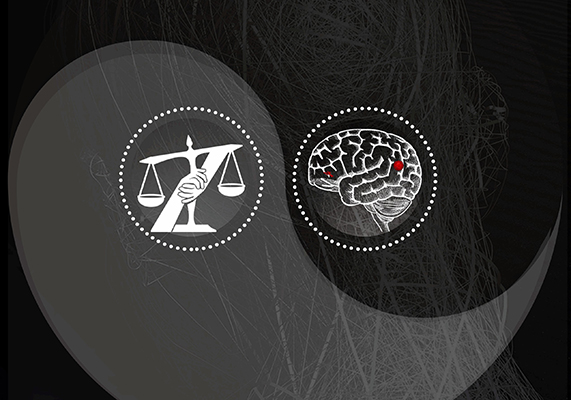
Figure 1. Gratitude related to interpersonal relationships influences just behavior. This phenomenon is associated with the ventromedial prefrontal cortex and the temporoparietal junction.
The research group led by Professor Chao Liu at the State Key Laboratory of Cognitive Neuroscience and Learning, Beijing Normal University, published a paper titled "From gratitude to injustice: Neurocomputational mechanisms of gratitude-induced injustice" in NeuroImage, a leading international journal in neuroimaging, in November 2021, revealing the computational neural mechanisms underlying gratitude-induced unjust behavior.
Gratitude shapes individual behavior and influences social harmony. Previous research has focused primarily on the relationship between gratitude and prosocial behavior. Only recently have researchers begun to attend to the possibility that gratitude may lead to moral violations. However, the cognitive and neural mechanisms underlying gratitude-induced moral transgressions remain unclear.
According to current scholarly understanding, the influence of gratitude on individuals involves three key processes. First, individuals perceive and gather three types of information about their interaction partner: the benefactor's intention to help, the cost the benefactor incurred in providing help, and the benefit the recipient derived from the help. Second, individuals integrate these three types of information and generate a corresponding level of gratitude. Third, gratitude motivates specific behaviors aimed at strengthening the relationship with the benefactor. Whereas prior research has investigated the neural mechanisms of the first two processes, the neural characteristics of the third process remain unknown.
To address this research gap, we developed a novel experimental paradigm (Figure 2) to observe how participants who received voluntary help from a benefactor (gratitude condition) versus those who received non-voluntary help (control condition) would subsequently punish the benefactor's unfair behavior toward a stranger.
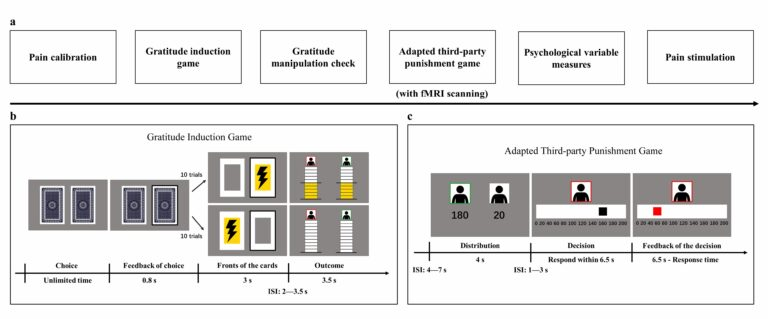
Figure 2. Schematic of the experimental paradigm. (a) Experimental procedure. (b) Gratitude induction task. (c) Adapted third-party punishment task.
The results showed that, compared with the control condition, participants in the gratitude condition reduced their punishment of the benefactor's unfair behavior (Figure 3). Both self-report measures and computational modeling indicated that a protective tendency toward the benefactor played an important role in this gratitude-induced unjust behavior.
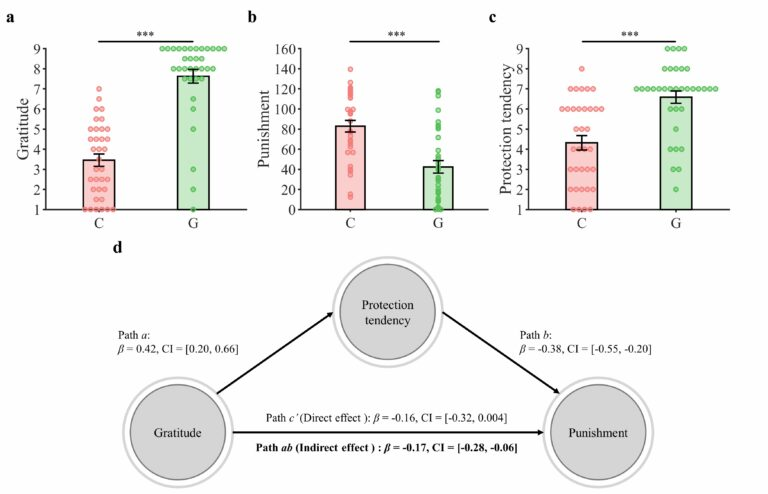
Figure 3. Behavioral results. (a) Participants in the gratitude condition reported stronger feelings of gratitude than those in the control condition. (b) Participants in the gratitude condition administered less punishment for the benefactor's unfair behavior than those in the control condition. (c) Participants in the gratitude condition showed a stronger tendency to protect the benefactor's interests than those in the control condition. (d) Protective tendency mediated the effect of gratitude on punishment.
The fMRI results revealed that brain regions associated with mentalizing and reward processing—specifically, the temporoparietal junction and the ventromedial prefrontal cortex—were linked to gratitude-induced unjust behavior (Figures 4 and 5).
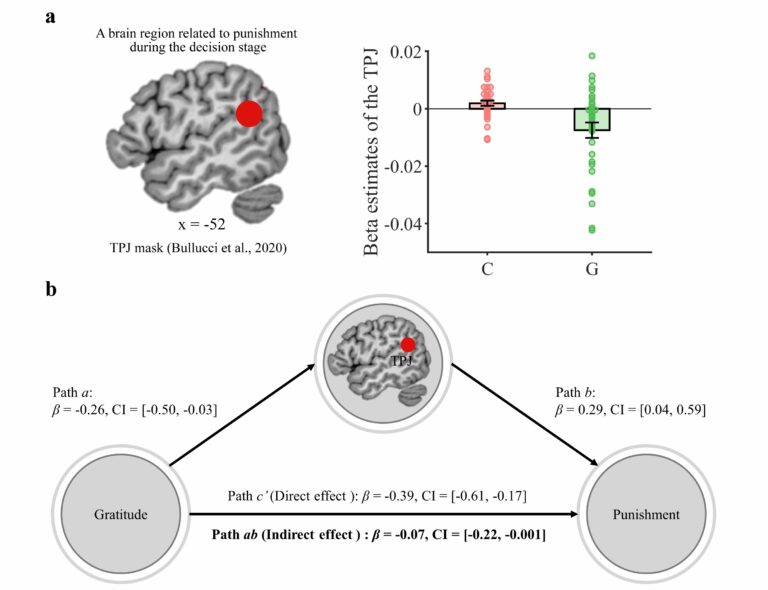
Figure 4. Results for the temporoparietal junction. (a) Participants in the gratitude condition showed stronger activation in the temporoparietal junction than those in the control condition. (b) Temporoparietal junction activation mediated the effect of gratitude on punishment.
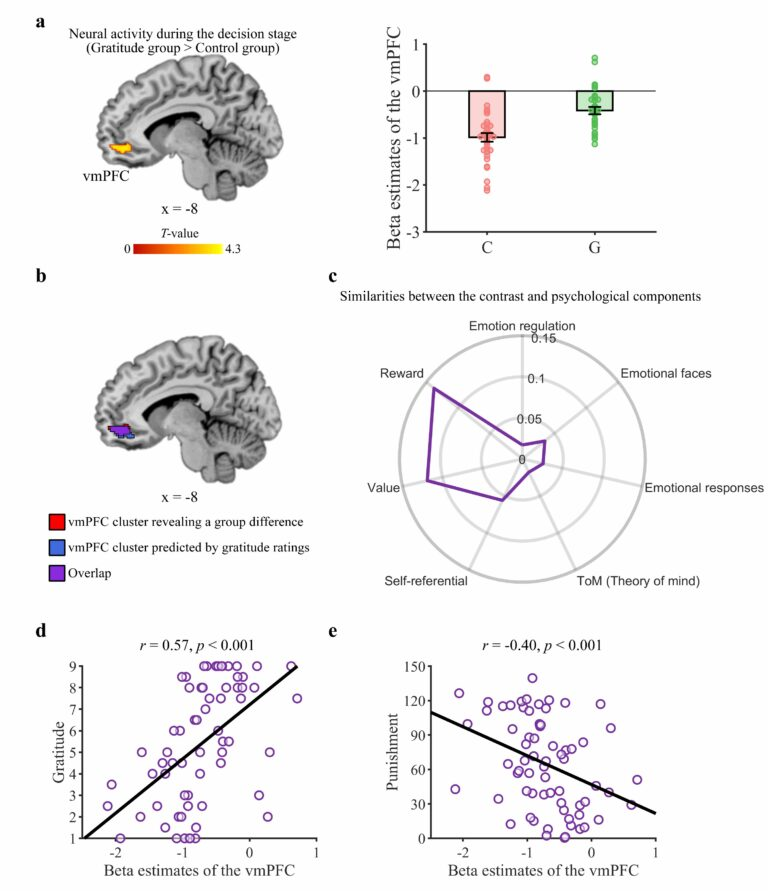
Figure 5. Results for the ventromedial prefrontal cortex. (a) Participants in the gratitude condition showed stronger activation in the ventromedial prefrontal cortex than those in the control condition. (b) Between-condition differences overlapped substantially with ventromedial prefrontal cortex activation associated with gratitude ratings. (c) The observed ventromedial prefrontal cortex activation was likely related to reward processing. (d) Gratitude was correlated with ventromedial prefrontal cortex activation. (e) Medial prefrontal cortex activation was correlated with punishment.
These findings suggest that individuals experiencing gratitude care about their benefactor's interests, value opportunities to interact with their benefactor, and reduce behaviors that may harm the benefactor's interests (e.g., punishment). This study underscores that the social function of gratitude is to strengthen the relationship between the beneficiary and the benefactor, reveals the potential dark side of gratitude, and provides a new perspective for understanding the nature of gratitude.
The first author of the paper, Dr. Ruida Zhu, received his Ph.D. from the State Key Laboratory of Cognitive Neuroscience and Learning, Beijing Normal University, and is currently working and studying at the Department of Economics, University of Zurich. The corresponding author is Professor Chao Liu. This research was supported by the National Natural Science Foundation of China, the National Social Science Fund of China, and other funding sources.
Publication Information and Download Link:
Zhu, R., Xu, Z., Su, S., Feng, C., Luo, Y., Tang, H., Zhang, S., Wu, X., Mai, X., & Liu, C. (2021). From gratitude to injustice: Neurocomputational mechanisms of gratitude-induced injustice. NeuroImage, 245, 118730. https://doi.org/https://doi.org/10.1016/j.neuroimage.2021.118730. [PDF]