该联合声明在2025"一带一路"国际科学组织联盟(ANSO)大会:面向可持续未来的科学与创新(ANSO General Conference 2025: Science and Innovation for a Sustainable Future)期间发布。国际人工智能发展与治理研究网络(International Research Network on AI Development and Governance, 简称AIR Net)正式成立,中国科学院自动化研究所研究员、北京前瞻人工智能安全与治理研究院院长曾毅、剑桥大学Seán Ó hÉigeartaigh教授主持了成立仪式并发布联合声明。
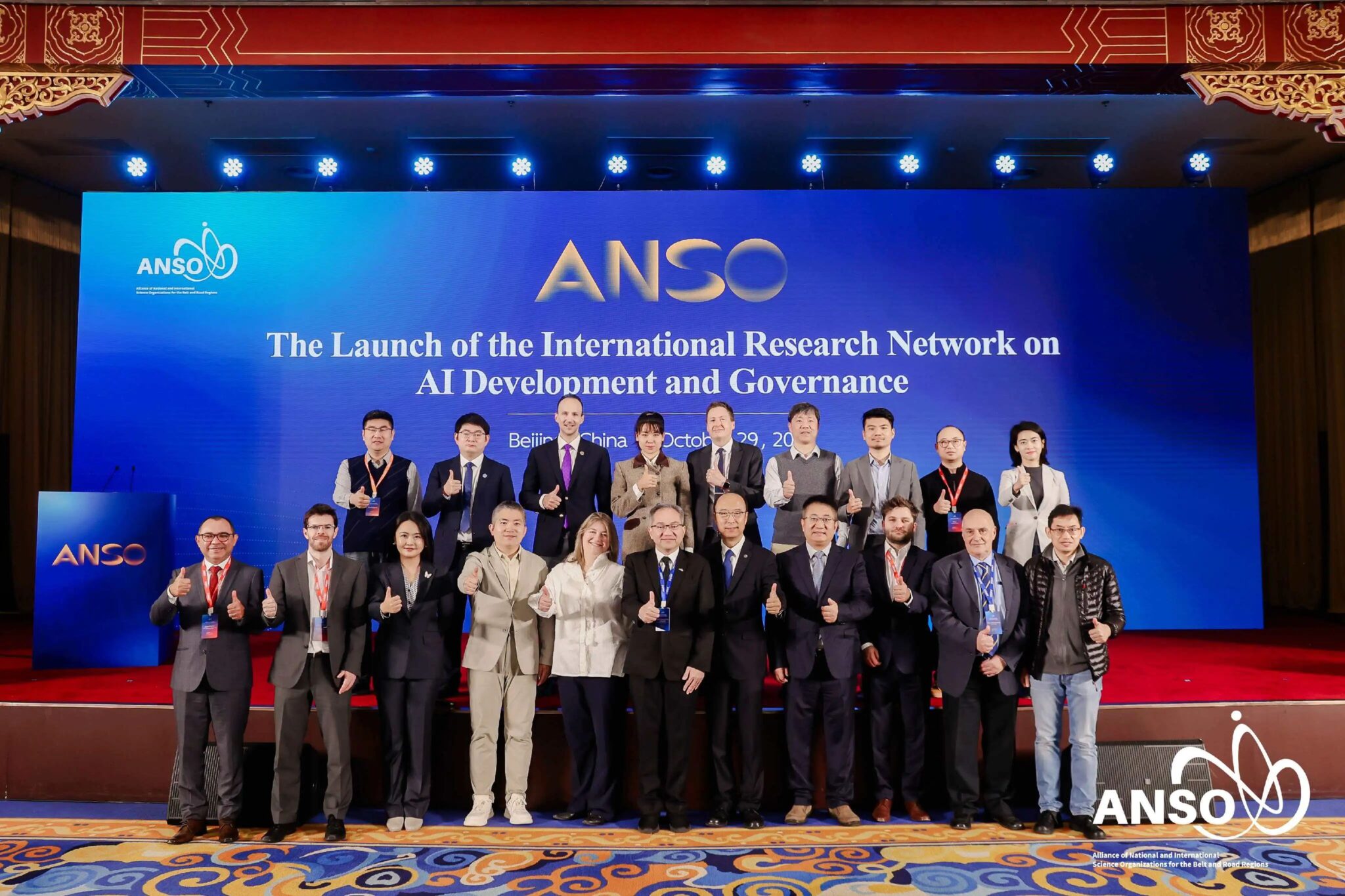
国际人工智能发展与治理研究网络(International Research Network on AI Development and Governance, 简称AIR Net)正式成立
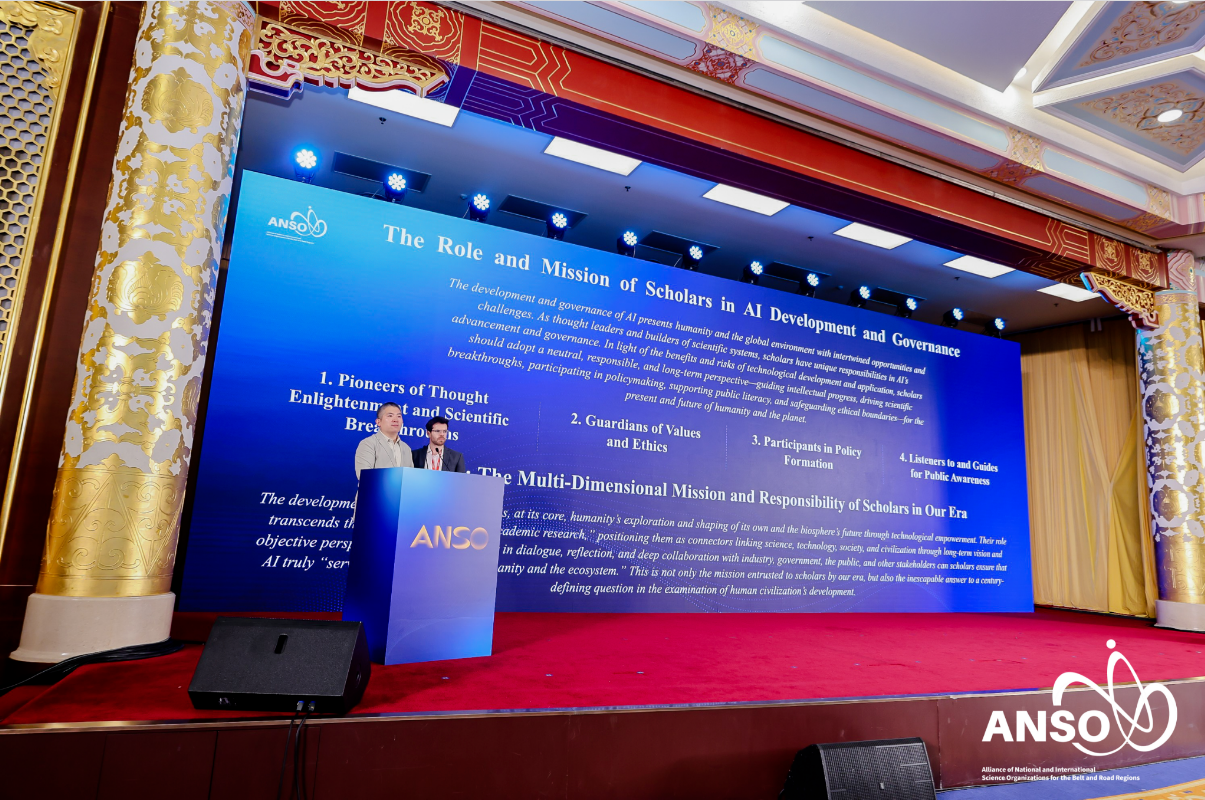
研究网络联合主席发布“研究者在人工智能发展与治理中的角色与职责”联合声明
人工智能的发展与治理,为人类及全球环境带来了机遇与挑战交织的复杂图景。作为思想先驱与科学体系的构建者,研究者在人工智能的发展与治理中肩负着独特责任。面对技术研发与应用所带来的福祉与风险,研究者应秉持中立、负责且立足长远的视角,引导知识进步、推动科学突破、参与政策制定、促进公众认知、守护伦理边界,这一切都是为了人类与地球的当下与未来。
1. 思想启迪与科学突破的先行者
研究者应以科学与工程的视角,确保人工智能发展路径的合理性。秉持长远思维以克服技术短视,研究者应探索多元路径,无论何种方向可能在短期内产生相对更优的应用效果,都应为应对不确定的未来做好理论与基础准备。不同学科领域的研究者应通过跨界视角深度协作,审视自然与人工智能的本质及其关系,以前瞻视野研究人工智能的科学技术基础及其潜在社会影响。
2. 价值与伦理的守护者
自然科学与社会科学研究者应主动引导公众共同思考:人工智能应当为何而用,又应当有所不为。他们必须秉持审慎的批判精神,客观评估技术进步与应用带来的收益与危害,为人工智能发展注入理性与人文温度。技术的发展与应用,应以促进人类与生态繁荣为最高目标。研究者不仅要及时预见、识别并预警伦理风险,更需与产业界、政府协同,通过科技与治理手段共同消除潜在风险。
3. 政策制定的参与者
研究者是连接技术实践与制度设计的关键桥梁。他们有责任将学术研究与社会关切转化为政策提案与建议,以前瞻视野、专业知识和实证依据评估并确证风险,为政策制定提供理论依据与参考坐标。他们应通过比较研究,审视并借鉴国际经验,在全球合作中担当倡导者、参与者与沟通者,为国际政策与标准的形成贡献力量。在推动产、学、研、政多方互动的过程中,研究者应以客观立场助力政策落地与敏捷治理的校准。
4. 公众认知的倾听者与引导者
人工智能的快速发展和广泛渗透,使公众在期待智能生活的同时,也对潜在风险缺乏充分认知,产生诸多困惑。研究者在倾听公众关切的同时,也应支持社会形成更健全的理解。通过科普著作、公开讲座等多种方式,他们应帮助公众建立对人工智能本身、其发展阶段及潜在风险的科学客观认知。通过研究公众需求与忧虑,研究者可将这些声音融入技术未来发展与应用的轨迹中,与企业、政府等多方共同回应发展中的需求与挑战,积极回应公众与社会关切。
时代赋予研究者的多维使命与责任
人工智能的发展与治理,本质上是人类借技术之力对自身及地球生态未来进行的探索与塑造。研究者不仅是知识前沿与科学进步的探索者,更是伦理边界的守护者;不仅是政策制定的参与者,也是公众理解与素养的引导者。他们的角色已超越“学术研究”这一单一维度,成为以长远眼光和客观视角连接科技、社会与文明的纽带。唯有与产业、政府、公众等多方深度对话、反思并协作,研究者才能确保人工智能真正“服务于人与生态的繁荣”。这是时代赋予研究者的使命,也是人类文明发展答卷上不容回避的世纪之问。
The Role and Mission of Researchers in AI Development and Governance
---- A Joint Statement from International Research Network on AI Development and Governance (AIR Net)
The development and governance of artificial intelligence (AI) presents humanity and the global environment with intertwined opportunities and challenges. As thought leaders and builders of scientific systems, Researchers have unique responsibilities in AI’s advancement and governance. In light of the benefits and risks of technological development and application, Researchers should adopt a neutral, responsible, and long-term perspective—guiding intellectual progress, driving scientific breakthroughs, participating in policymaking, supporting public literacy, and safeguarding ethical boundaries—for the present and future of humanity and the planet.
1. Pioneers of Thought Enlightenment and Scientific Breakthroughs
Researchers should ensure the rationality of AI’s developmental pathways by providing scientific and engineering perspectives. By embracing long-term thinking to counteract technological short-sightedness, Researchers should explore diverse approaches, regardless of which path may yield relatively better short-term applications, thereby preparing theoretical and foundational grounds for navigating an uncertain future. Researchers across disciplines should collaborate deeply through interdisciplinary perspectives, examining the essence of nature, AI, and their relationship, while studying the scientific and technological foundations of AI and its potential social impacts from a forward-looking perspective.
2. Guardians of Values and Ethics
Researchers in the natural and social sciences should engage with the public to consider what AI ought to be used for, and how it ought not to be used. They must maintain a cautious, critical spirit to objectively assess the benefits and harms of technological advances and applications, infusing AI development with rationality and humanistic warmth. AI should be developed and applied with the overarching goal of promoting human and ecological flourishing. Researchers must not only anticipate, identify, and report ethical risks in a timely manner, but also work collaboratively with industry and government to mitigate and eliminate potential risks through scientific, technological, and governance approaches.
3. Participants in Policy Formation
Researchers serve as crucial bridges linking technological practice with institutional design. They have a responsibility to translate academic research and societal concerns into proposals and policy recommendations, using foresight, expertise, and empirical evidence to assess and substantiate risks, thereby providing theoretical foundations and reference points for policymaking. Through comparative research, they should examine and draw on international experience, acting as advocates, participants, and bridges in global cooperation, contributing to the formulation of international policies and standards. By maintaining objectivity and promoting interaction among industry, academia, research, and government, Researchers should help calibrate policy implementation and agile governance.
4. Listeners to and Guides for Public Awareness
The rapid development and widespread penetration of AI have brought both anticipation and confusion among the public—desire for intelligent living alongside a lack of awareness of potential risks. Researchers should listen to public concerns while supporting societal understanding. Through popular science works, public lectures, and other efforts, they should help foster a scientific and objective public understanding of AI, its stages of development, and potential risks. By conducting research into public needs and concerns, Researchers can incorporate these perspectives into the future trajectory of technological development and application, working with businesses, governments, and other stakeholders to address the demands and challenges of progress while actively responding to public and societal concerns.
The Multi-Dimensional Mission and Responsibility of Researchers in Our Era
The development and governance of AI is, at its core, humanity’s exploration and shaping of its own and the biosphere’s future through technological empowerment. Researchers are not only explorers at the frontier of intellectual inquiry and scientific progress, but also guardians of ethical boundaries; not only participants in policymaking, but also guides for public understanding and literacy. Their role transcends the single dimension of “academic research,” positioning them as connectors linking science, technology, society, and civilization through long-term vision and objective perspective. Only by engaging in dialogue, reflection, and deep collaboration with industry, government, the public, and other stakeholders can Researchers ensure that AI truly “serves the flourishing of humanity and the ecosystem.” This is not only the mission entrusted to Researchers by our era, but also the inescapable answer to a century-defining question in the examination of human civilization’s development.
简介
国际人工智能发展与治理研究网络(International Research Network on AI Development and Governance, 简称AIR Net)是由"一带一路"国际科学组织联盟(ANSO)支持的学者与科研工作者主导的国际研究合作平台,汇聚全球人工智能相关跨学科研究人员与机构,共同致力于发展造福人类、推动可持续发展的向善人工智能,以及人工智能安全与风险、全球能力建设与普惠共享研究与应用。研究网络定期围绕选定的前沿议题召开会议,推动联合科学研究与科学报告。
联合主席
曾毅 (中国科学院自动化研究所、北京前瞻人工智能安全与治理研究院)
Seán Ó hÉigeartaigh (剑桥大学)
专家组成员
Christoph Luetge (Technical University of Munich, Germany)
Edson Prestes (Professor, Universidade Federal do Rio Grande do Sul, Brasil)
Anna Abramova (Professor, Director of AI Center, Moscow State Institute of International Relations, Russia)
Max Stauffer (Co-founder, Simon Institute for Longterm Governance)
Cyrus Hodes (Research Fellow, Mohammed Bin Rashid School of Government (MBRSG), UAE)
Renan Araujo (Institute for AI Policy and Strategy; originally Brazil)
Bengusu Ozcan (Institute for Future Generations, Turkey)
Sumaya Nur Adan (Centre for AI Security and Access, originally Kenya)
Helen Meng (香港中文大学教授,人工智能)
Jiji Zhang (香港中文大学教授,哲学)
刘嘉 (清华大学教授,心理学)
刘超 (北京师范大学教授,心理学)
杨耀东 (北京大学研究员,人工智能)
申卫星 (清华大学教授,法学)
陆超超 (上海人工智能实验室研究员,人工智能)
黄民烈 (清华大学教授,人工智能)
张凌寒(中国政法大学,法学)
苏航 (清华大学副教授,人工智能)
赵东城 (北京前瞻人工智能安全与治理研究院高级研究员,人工智能安全)
何召锋 (北京邮电大学教授,人工智能)
魏凯 (中国信息与通信研究院人工智能研究所所长,人工智能产业与标准化)
孙浩 (中国人民大学教授,人工智能)
魏哲巍 (中国人民大学教授,人工智能)
刘玮 (中国人民大学教授,哲学)
Vasilis Trigkas (清华大学教授,国际关系)
徐葳 (清华大学教授,人工智能)
梁一韬 (北京大学研究员,人工智能)
金耀辉 (上海交通大学教授,人工智能)
赵菲菲(中国科学院自动化研究所副研究员)
谢旻希 (安远AI, 人工智能安全)
顾问委员会
Vincent Muller (洪堡教授,德国埃尔朗根-纽伦堡大学,人工智能哲学与伦理)
金耀初 (西湖大学教授,人工智能)
Dacheng Tao (新加坡南洋理工大学教授,人工智能)
Michael Witbrock (新西兰奥克兰大学教授,人工智能)
薛澜 (清华大学教授,公共政策)
王国豫 (复旦大学教授,哲学)
文继荣 (中国人民大学教授,人工智能)